|
10th Annual Electrical Industry
Vendor Appreciation Night & Trade Show This May, the NECA - IBEW Electrical Training Center will celebrate 10 years of hosting the annual Electrical Industry Vendor Appreciation Night and Trade Show. This event brings together many of the vendors that supply our job sites with the tools, materials and safety related products necessary to accomplish our work. Company representatives will have samples and information on new and improved products that can be used to make our electrical installations easier, safer and more profitable. I invite you to join me from 4:00 PM to 8:00 PM on Wednesday, May 21st, in supporting the companies, who in turn, have supported our efforts on the job sites and at the Training Center. Come and enjoy refreshments, participate in an ongoing gift raffle and see the latest electrical tools and materials from our industry partners. |
![]() |
![]() |
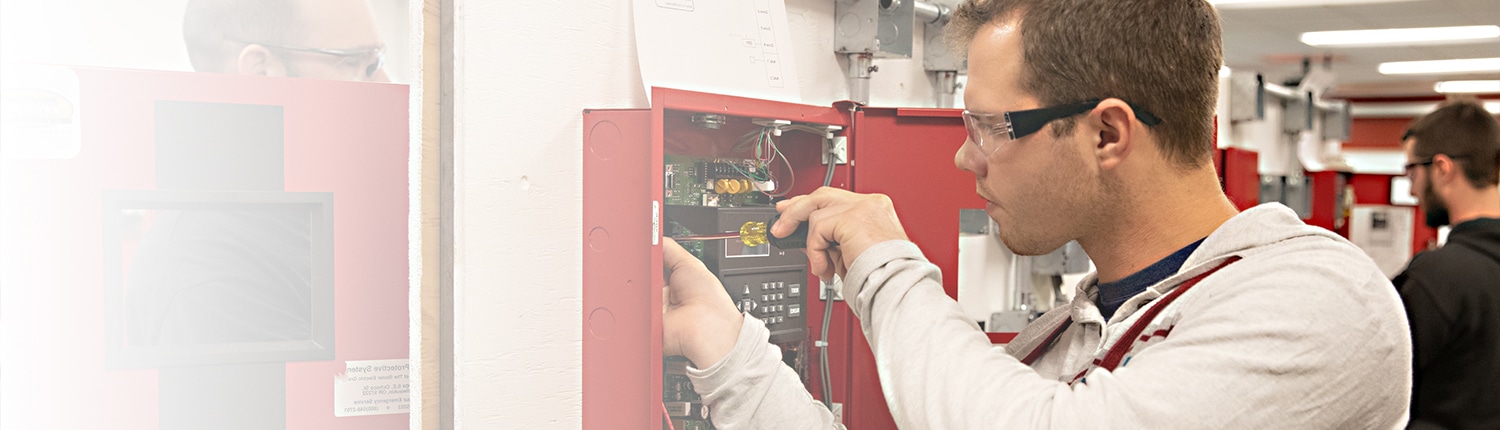
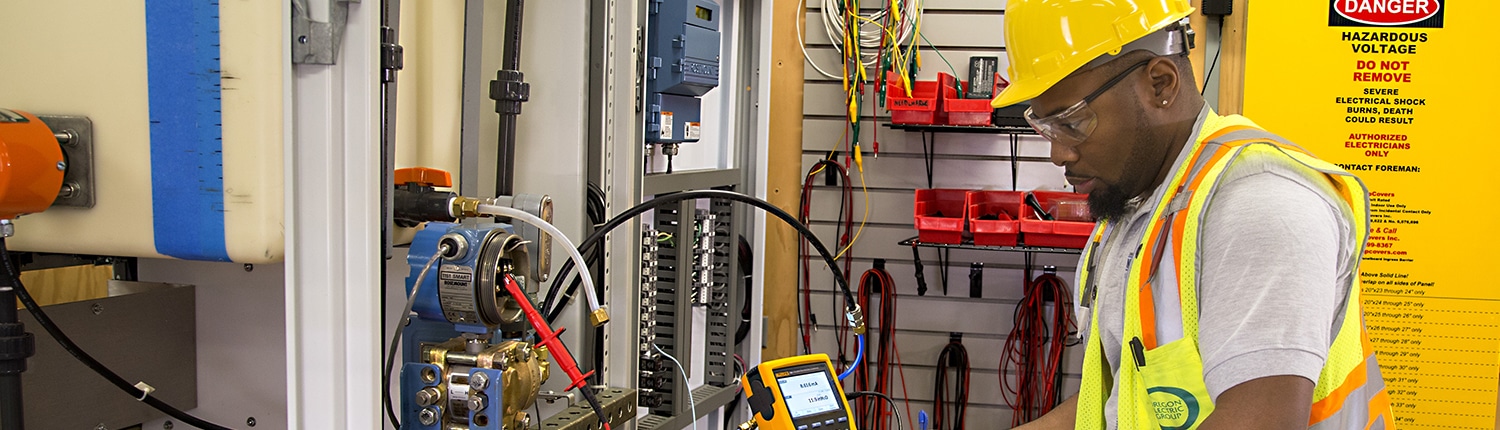
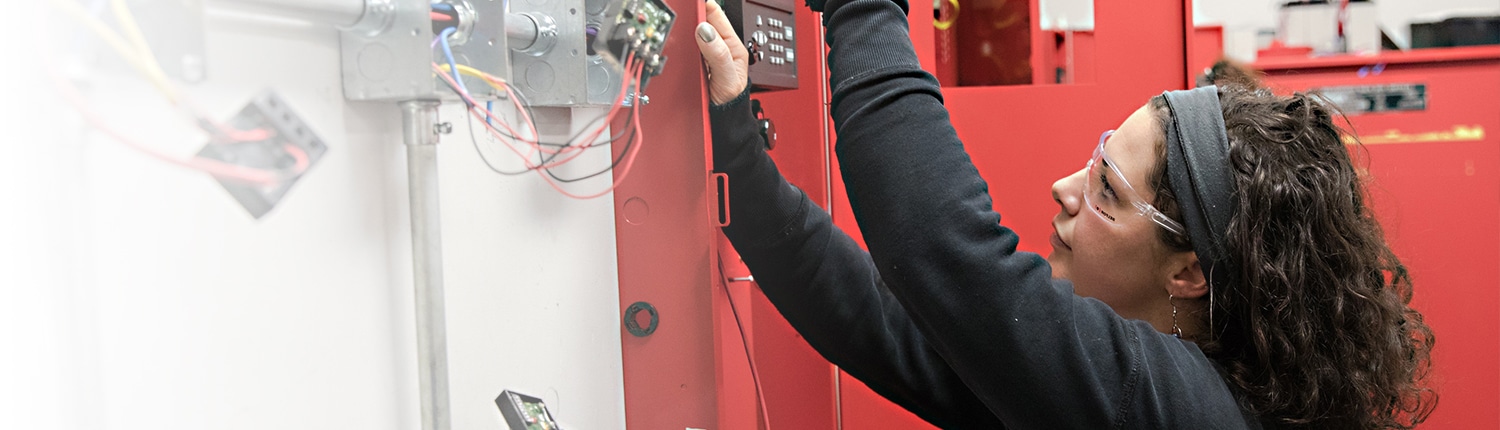
The Best Apprenticeship Training The NIETC trains apprentices for signatory contractors in residential, limited energy, and Commercial/Industrial programs. In addition to apprenticeship, the NIETC is proud of its commitment to membership training. Electricians working in the Jurisdiction of local 48 in both Washington and Oregon are required to attend continued education training every three years to maintain their license, improving and honing their skills along the way. The training that members receive provide the journey level electrician with the sharpest skills and up to date knowledge of the latest industry trends and current electrical code requirements, providing for installations that are free from costly errors or code violations. |
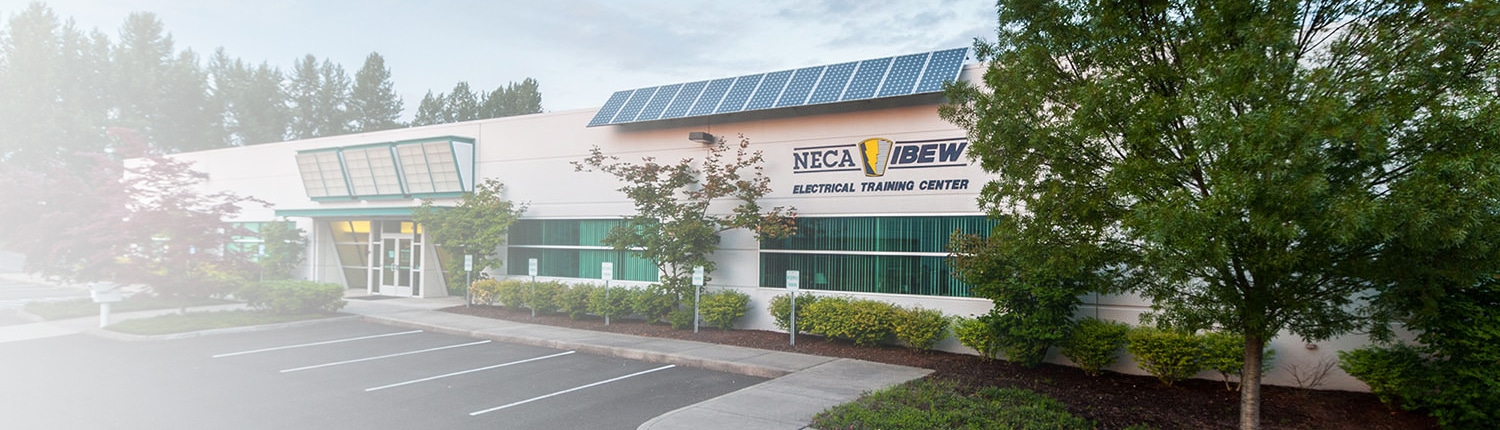
The NECA-IBEW Electrical Training Center The NECA-IBEW Electrical Training Center (NIETC) is a 54,000 sq. foot state of the art training center, conveniently located on the fringes of Portland, Oregon, minutes from downtown and immediately accessible to the Portland International Airport. Members of IBEW LU #48 and others enjoy the benefits of the 19 classrooms; seven specifically lab related, three large open labs dedicated to welding, conduit bending and circuitry, and a top rate 300 seat auditorium. |
![]() |
|
Do You Need More CEU Credit?
In Oregon, licenses expire on October 1st. Each license type has a different year associated with its expiration. Oregon requires varying hours of code change for each license. See the chart below for requirements for each license. In Washington all electrician licenses have the same education requirements. Each license requires 24 hours of education. Each license lasts 3 years and expires on the holder’s birth date. In addition, each license holder must complete eight hours of code change and 4 hours of RCW/WAC, which can be part of the 24 hour total that is required.
|
||||||||||||||||||||||||||||
Leadership Through Continuing Education Continuing education requirements include training classes in area's of Code change and Code related. Code change typically includes eight to twelve hours of the most significant changes in the latest version of the National Electric Code. This course provides the electrician with the latest in safe installation practices and new requirements in the Industry. |
![]() |
| Code Related Courses and Licensing Requirements Code Related courses focus on topics covered in the National Electric Code, as well as local area requirements. Titles include Service Requirements, Overcurrent Protection, Grounding and Bonding, Health Care Facilities, Hazardous Locations, Fire Alarms, and Residential. Service Requirements including disconnecting locations, Service conductors, and other components of the Service. Overcurrent Protection includes information regarding sizing and operation of overcurrent protective devices, conductors and typical ampere ratings of conductors and equipment. Grounding and Bonding covers various parts of the grounding system including grounding electrodes, sizing of conductors and requirements for bonding of metallic systems. Health Care Facilities primarily covers requirements for wiring methods and installation requirements for hospitals and other medical care facilities. Hazardous Locations reviews the requirements for sealing and protection of components, and defining class and division ratings. Fire Alarms provides information on code requirements from the NEC and NFPA 72-National Fire Alarm Code. Residential courses cover location requirements for receptacles and fixtures as well as calculation process for determining loads and branch circuit requirements. |
|
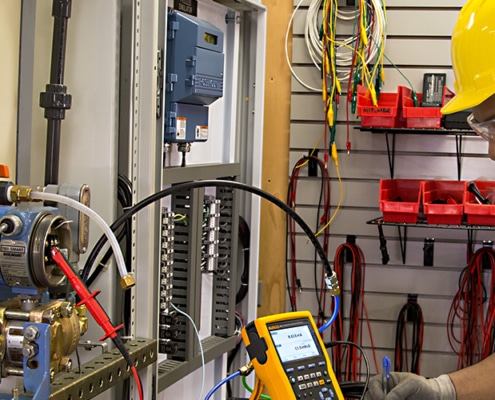
| Code Related Courses and Future Technologies Other Code Related courses range from lighting control and automation to Amp Act 1. These courses include topics electricians commonly encounter on the jobsite, providing installation information for the worker. Courses on Lighting controls provide information on the latest in Home theater technology, lighting controls and Audio Visual protocol throughout the home. Courses covering Low Voltage termination and practices provide the attendee with generic information relating to EIA/TIA standards as well as vendor specific processes for making copper and fiber connections. Courses on Instrumentation and PLC’s are also highly regarded among attendee’s. |
|
| Safety Training Safety is another area of training that provides members with the needed information regarding the latest trends in PPE, OSHA requirements, lift training and electrical safety, as well as First Aid and CPR training. These courses fall under the heading of OSHA and NFPA 70E, and also apply for Code Related credit. |
|
| Specialized and Management Training Computer courses such as "Excel spreadsheets" cover processes for creating and modifying documents for material inventory to time cards, creating panel schedules and tracking management information such as "Change Orders" and "RFI's". Other trade type courses cover welding principles and hands on experience in topics such as conduit bending and powder actuated tools. These courses provide the attendee with the most current information and processes used in the industry today. |
|
| Defining An Industry by Being The Best Following an electrician through these apprenticeship programs and into their careers as journey level workers, combined with "state of the art" training facilities, highly trained instructional staff and meaningful continued education training provide the highest quality, professional installations by the very best trained workforce . NECA-IBEW is the clear choice for quality electrical installations. |
|
Related Links |
|
Visit other industry related websites.
|
Classes for CEU Credit |
|
Number of classes available that apply towards renewing your Journeyman license.
|
Classes by Month |
Show All Classes |
Class Locations |
Are You Certified? |
|
Many classes offer certified training. Here is a current list of certifications with the number of available classses.
|
Kenneth Fry
After earning his Journeyman License in 1971 Ken taught part-time in the apprenticeship program. In 1980 he accepted the position of Assistant Training Director, and in 1992 became the Executive Director. Ken has earned a B.S. from Eastern Oregon State, an M.A. in Education from Penn State and has served the electrical industry for over 39 years including seats on the Oregon State Apprenticeship and Training Counsel and the Washington State Electrical Board.
Rod Belisle
Rod graduated from the inside program in 1992. He has worked as an Electrician, Foreman, General foreman and Project manager for some of the most notable local projects, including the NIKE World Campus, Tualatin Valley Parks and Recreation and Hawthorne Farms Athletic Club. Rod graduated from the University of Tennessee’s National Training Institute, and became a principle member of code panel 9 for the NEC. Earning his Master Electricians license in Washington, Rod has a sincere interest in education and works as the Training Director for the NIETC in Portland, where he manages the training staff and focuses on Apprenticeship and Journeyman curriculum.
Barry Moreland
Barry Moreland – Safety Director- Journeyman Inside Wireman
Born in Vancouver, Washington and raised in Ridgefield. After 2 years attending Clark College, Barry entered the electrical apprenticeship and graduated in 1998. He is a member of the National Safety Council and the National Fire Protection Association and also serves as chairman of the Oregon OSHA Construction Advisory Committee.
Lance Hallberg
Lance is a graduate of the Commercial Inside Wireman program and is responsible for managing the IT infrastructure and software development at the training center.
Lance holds several industry certifications and has spoken at the Zend PHP Conference, MacWorld and the FileMaker Developers Conference.
He also teaches courses on Networking, Routers, Switches and WAN/LAN technologies.
Brian Crise
After serving 9 years in the Navy, Brian was accepted into the IBEW Local 48 apprenticeship program. In 1997, he graduated from the program and began teaching for the NIETC. He holds an Oregon Electrical Supervisors License (2005), an Electrical Inspector’s License, and has been appointed to represent the IBEW on NEC Code Making Panel #13. He is a member of the NECA Code Committee and has graduated from the NJATC National Training Institute.
John Mccamish
John has taught both part time and full time for the last twelve years at the NECA-IBEW Electrical Training Center.
Prior to becoming an electrician, John graduated from the University of Oregon in 1987. John entered the apprenticeship in 1990. Since becoming a Journeyman in 1995, Mr. McCamish has acquired his Master Electrician’s license in Washingon and NICET level 2 Fire Alarm Technician. In 2006, John earned his Oregon General Supervising Electrician Card and EPRI level B certification.
Laura Jenkins
After serving 4 years in the Military Laura was accepted as a NECA-IBEW Inside Apprentice and became a Journeyman Wireman in 1998. She has since earned her B.S. in Electrical Engineering from PSU. Laura works for the NIETC as a full time instructor and outreach coordinator.
Jason Jenkins
After going through the Nuclear Power program with the Navy, Jason joined Local 48 and graduated as Journeyman Wireman in 2000. Jason taught various computer related topics and became a full time instructor in 2004.
Christopher Edwards
In 2004, Christopher completed the Inside Wireman program with Local 48, in one of the first groups of apprentices to exclusively attend day school. He has experience in commercial and industrial installations and most recently worked as a service electrician specializing in troubleshooting and installation of variable frequency drives and building automation systems. Christopher has a B.S. from the School of Allied Arts and Architecture at the University of Oregon.
Ron Umali
Alan Keser
Jeff Luby